Last Updated: June 2026
Many people use the terms logo and brand identity interchangeably, but they are not the same thing.
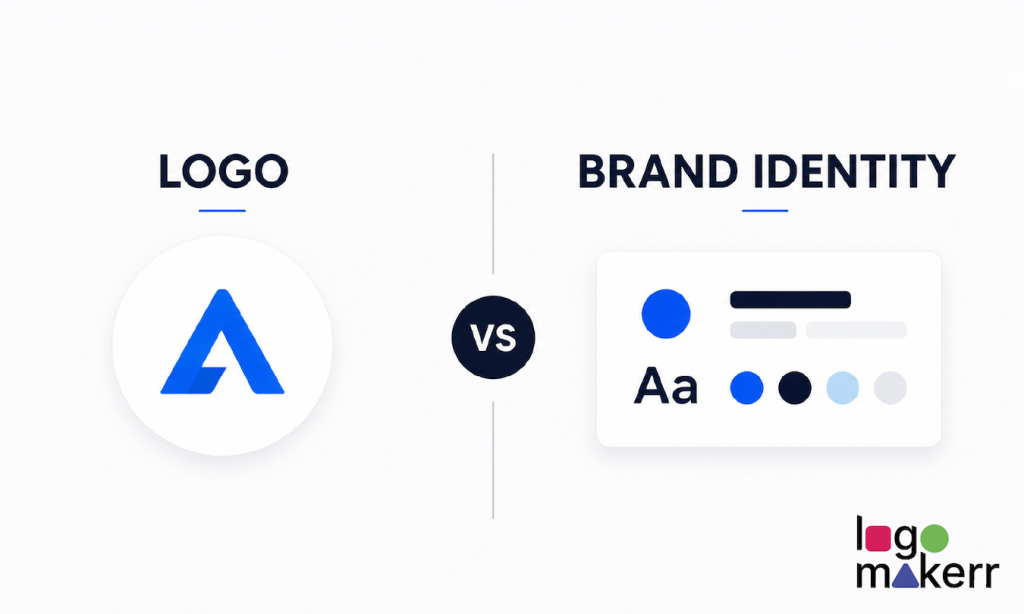
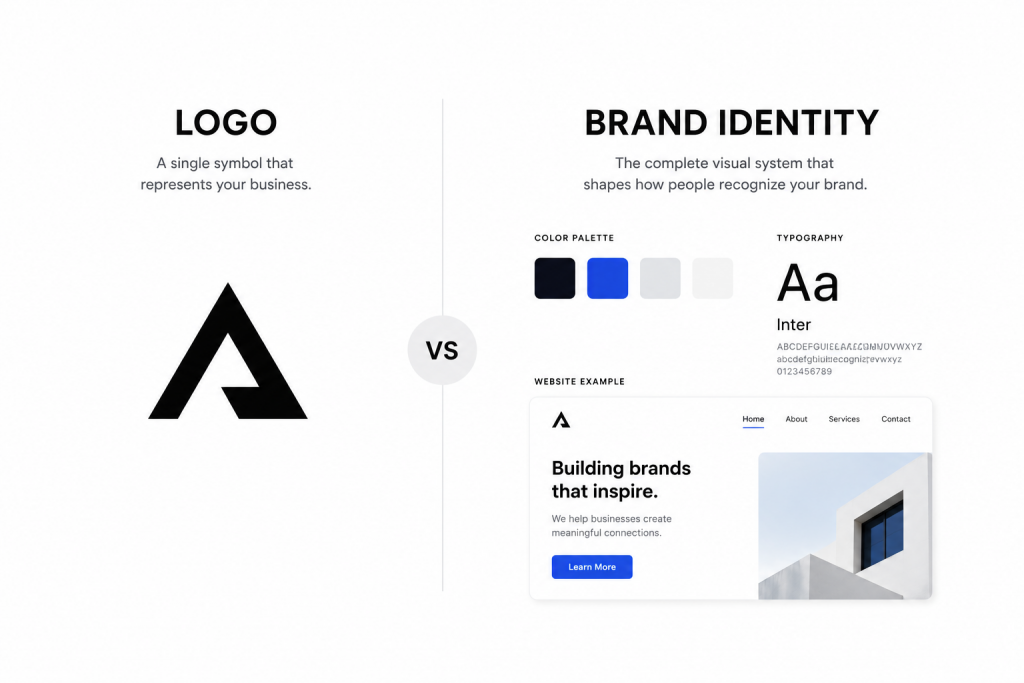
A logo is only one piece of your brand identity. Your brand identity is the complete visual system that shapes how customers recognize, remember, and trust your business.
Understanding this difference is essential whether you’re launching a startup, opening an online store, creating a personal brand, or refreshing an existing business.
If you’re just beginning your branding journey, using an AI logo generator can help you create a professional logo before expanding into a complete brand identity.
Quick Answer
A logo is a visual mark that represents your business.
A brand identity is the complete visual system surrounding your business, including:
- Logo
- Color palette
- Typography
- Icons
- Photography style
- Graphic elements
- Website appearance
- Social media design
- Brand guidelines
Think of it this way:
- Your logo is your signature.
- Your brand identity is your entire personality.
To better understand how all these visual elements work together, read our guide on what a brand identity is.
What Is a Logo?
A logo is a unique visual symbol that identifies your company.
Its purpose is simple:
Help people instantly recognize your business.
Strong logos are usually:
- Memorable
- Simple
- Timeless
- Versatile
- Easy to recognize
A well-designed logo should look equally professional on:
- Websites
- Business cards
- Social media profiles
- Product packaging
- Email signatures
- Mobile apps
Although logos are important, they are only one element of a successful brand.
Many successful companies have simple logos, but what truly differentiates them is the consistent experience customers receive every time they interact with the brand.
Modern businesses can now create impressive logos quickly using an AI logo generator before developing a complete branding system.
What Is Brand Identity?
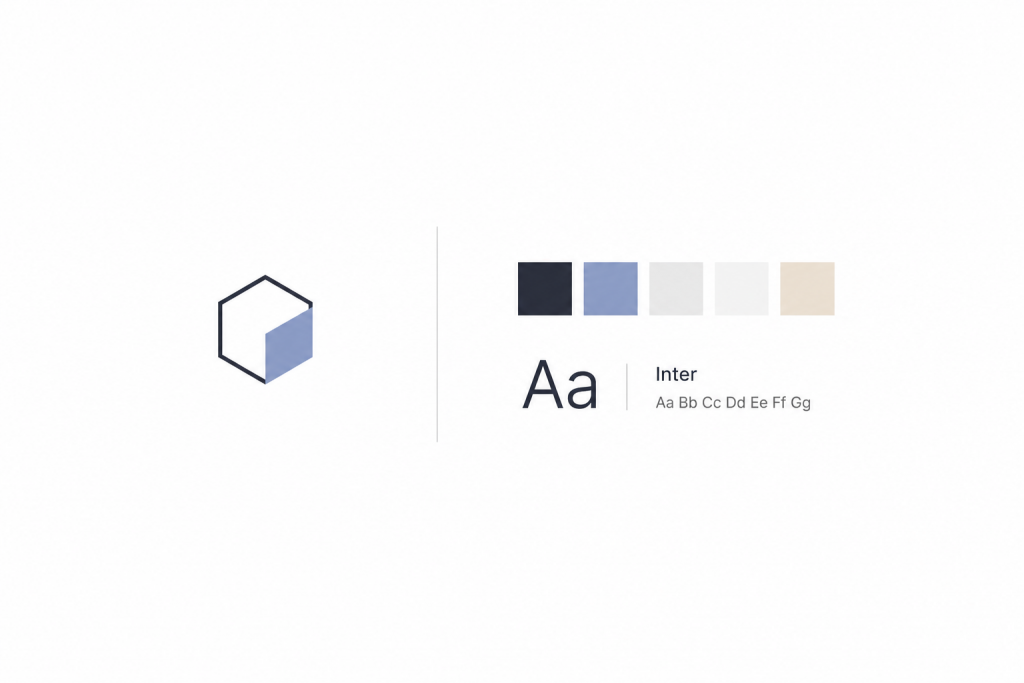
Brand identity is everything people see and experience visually when interacting with your business.
It extends far beyond the logo.
A complete brand identity typically includes:
- Primary logo
- Secondary logo
- Brand colors
- Typography
- Icons
- Illustration style
- Photography style
- Business cards
- Social media templates
- Website design
- Brand guidelines
These elements work together to create a consistent customer experience.
When customers repeatedly encounter the same visual style, they begin recognizing your business immediately—even before reading your company name.
That consistency builds familiarity.
Familiarity builds trust.
If you’re unfamiliar with the concept, our article explaining brand identity explores each component in greater detail.
Logo vs Brand Identity
| Logo | Brand Identity |
|---|---|
| Single visual mark | Complete visual system |
| Represents the company | Represents the entire customer experience |
| Usually one design | Multiple connected assets |
| Easier to create | Requires strategic planning |
| Foundation of branding | Complete branding ecosystem |
Your logo starts the conversation.
Your brand identity tells the entire story.
Why the Difference Matters
Many entrepreneurs spend weeks perfecting their logo but never think about the rest of their branding.
This creates inconsistency.
Imagine visiting a company that has:
- A modern logo
- An outdated website
- Different fonts everywhere
- Random social media graphics
- Inconsistent colors across every platform
The company immediately feels less professional.
Now imagine another business where every customer touchpoint feels connected.
The website, product packaging, emails, advertisements, and social media all share the same visual language.
Even if both businesses offer similar products, customers naturally trust the second company more.
That is the power of a well-designed brand identity.
Can You Have a Brand Without a Logo?
Not really.
Your logo serves as the visual foundation of your brand.
However, having only a logo does not automatically create a recognizable brand.
Think of your logo as the front door of a house.
Brand identity is the entire house.
Without the rest of the structure, the front door has very little meaning.
Customers experience your brand through every interaction—not just through your logo.
Which Should You Create First?
Always begin with your logo.
Once your logo is finalized, it becomes much easier to develop:
- Brand colors
- Typography
- Website design
- Business cards
- Social media graphics
- Marketing materials
- Packaging
Everything else grows naturally from that visual foundation.
Businesses that begin with a professionally designed logo usually find it much easier to maintain consistent branding as they grow.
How AI Is Changing Branding
Only a few years ago, creating a professional brand identity required hiring a designer or an expensive branding agency.
Today, AI-powered design tools have dramatically changed that process.
Modern AI platforms can help entrepreneurs quickly generate:
- Logo concepts
- Color palettes
- Typography combinations
- Layout ideas
- Brand styles
Many founders first experiment with a free AI logo generator before investing in more comprehensive branding.
This approach allows startups to validate their ideas without committing a large branding budget.
As the business grows, the visual identity can evolve alongside it.
Characteristics of a Strong Brand Identity
Successful brands often share several common characteristics.
Consistency
Every customer interaction should feel connected.
The same colors, typography, layouts, and design language should appear across every platform.
Simplicity
Simple branding is easier to recognize and remember.
Avoid unnecessary complexity.
The strongest brands often communicate with fewer visual elements rather than more.
Recognition
Customers should recognize your business even before reading the company name.
Strong visual identities become instantly familiar over time.
Flexibility
Your brand identity should work across:
- Websites
- Mobile apps
- Social media
- Product packaging
- Print materials
- Advertising
A flexible identity grows alongside your business and remains effective regardless of where customers encounter your brand.
Why Startups Need Brand Identity Earlier Than Ever
Today’s customers rarely discover businesses through a single channel.
Someone may first see your:
- Instagram profile
- Google search result
- LinkedIn page
- Website
- YouTube thumbnail
If each platform looks completely different, customers may question the professionalism of your business.
Building a consistent visual identity from the beginning helps businesses appear more trustworthy and memorable, regardless of company size.
Common Brand Identity Mistakes
Many businesses unknowingly weaken their brand by making avoidable mistakes.
Treating the Logo as the Entire Brand
A logo is only one component of your visual identity.
Without consistent colors, typography, layouts, and messaging, even a great logo cannot create a memorable brand.
Copying Competitors
Looking at competitors for inspiration is helpful.
Copying their visual style is not.
Your brand should communicate what makes your business unique.
Using Too Many Fonts
Limit yourself to two or three typefaces.
Using too many fonts creates visual clutter and reduces professionalism.
Changing Colors Frequently
Customers associate colors with brands.
Constantly changing your color palette makes your business harder to recognize.
Ignoring Brand Guidelines
As your business grows, different people may create marketing materials.
Without clear guidelines, consistency quickly disappears.
How to Build a Strong Brand Identity
Creating a professional brand identity doesn’t have to be overwhelming.
A simple process usually works best.
Step 1: Design Your Logo
Start with a memorable logo that reflects your business and industry.
Modern AI logo generators allow entrepreneurs to explore multiple logo concepts in minutes before selecting a final direction.
Step 2: Choose Brand Colors
Select two to four primary colors that communicate the personality of your business.
Use them consistently across every platform.
Step 3: Select Typography
Choose fonts that match your industry and remain readable on both desktop and mobile devices.
Step 4: Create Supporting Graphics
Develop:
- Icons
- Illustrations
- Background patterns
- Social media templates
These supporting elements help reinforce recognition.
Step 5: Stay Consistent
Consistency matters more than complexity.
Every touchpoint should feel like it belongs to the same brand.
Brand Identity for Small Businesses
Many small business owners believe branding is only important for large companies.
In reality, branding often matters even more for small businesses.
Professional branding helps:
- Build credibility
- Increase customer trust
- Improve brand recognition
- Differentiate from competitors
- Support long-term marketing
A consistent visual identity allows even new businesses to appear more established.
Can AI Help Build a Brand Identity?
Artificial intelligence has transformed how entrepreneurs approach branding.
Instead of spending weeks waiting for initial concepts, business owners can quickly experiment with different visual directions.
Today’s AI tools can assist with:
- Logo creation
- Color palette suggestions
- Typography recommendations
- Layout ideas
- Brand inspiration
Many entrepreneurs begin with a free AI logo generator before refining their visual identity as the business grows.
AI doesn’t replace strategy, but it dramatically reduces the time required to create professional branding.
Logo vs Brand Identity: Which Is More Important?
Neither.
They serve different purposes.
A logo helps customers identify your business.
A brand identity shapes how customers remember your business.
Without a logo, customers struggle to recognize you.
Without a brand identity, customers struggle to remember you.
The strongest brands invest in both.
Related Articles
Continue learning about branding with these guides:
- Best AI Logo Generator for Small Businesses
- Best Free AI Logo Generators
- What Is a Brand Identity?
- Can AI-Generated Logos Be Trademarked?
- Looka Alternatives
Frequently Asked Questions
Is a logo the same as a brand identity?
No.
A logo is a single visual symbol.
A brand identity includes your logo along with colors, typography, imagery, design systems, and every visual element customers associate with your business.
Why is brand identity important?
A strong brand identity builds recognition, trust, and consistency across every customer interaction.
It helps businesses appear more professional and memorable.
Should startups invest in brand identity?
Yes.
Even simple branding helps startups create credibility and stand out from competitors.
Many founders begin with an AI-generated logo before expanding into a complete brand identity.
Can AI create a professional brand identity?
AI can help generate logo concepts, color palettes, typography suggestions, and branding inspiration.
Many entrepreneurs use AI as the first step toward developing a more complete visual identity.
Can I update my brand identity later?
Absolutely.
Many successful businesses refresh their branding as they grow.
The important thing is maintaining consistency while your business evolves.
Final Verdict
Although the terms are often used interchangeably, a logo and a brand identity are not the same.
A logo is the symbol customers recognize.
A brand identity is the complete visual experience customers remember.
For entrepreneurs launching a new business, creating a professional logo is the first step.
From there, building consistent colors, typography, graphics, and marketing materials transforms that logo into a memorable brand.
Thanks to modern AI-powered branding tools, creating a professional visual identity is now faster and more affordable than ever.
Whether you’re starting a side project, launching a startup, or growing a small business, investing in a consistent brand identity will help customers recognize, trust, and remember your business.